By Mark Johnston, Owner, Concepts Plumbing
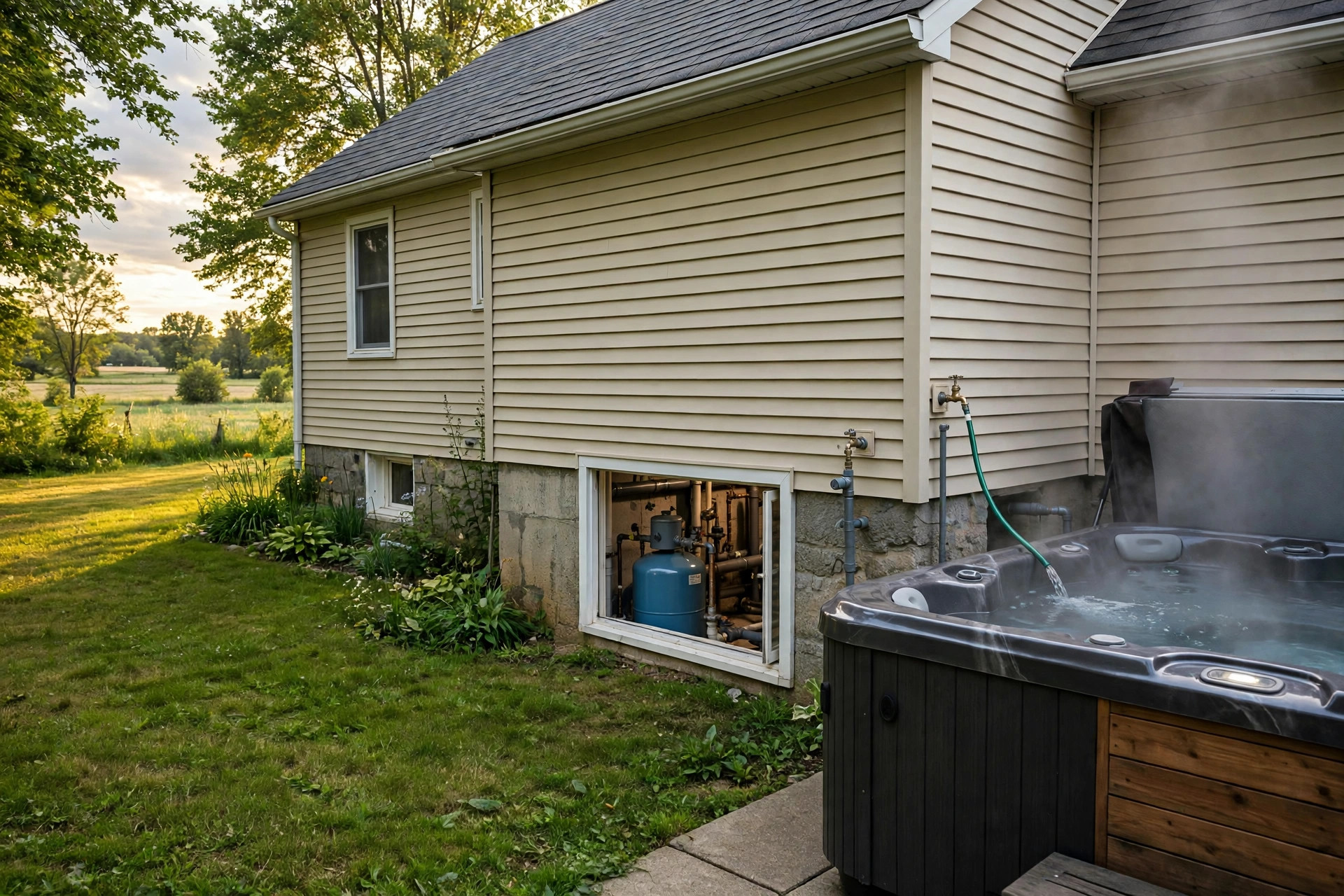
Twenty thousand litres is a strange amount of water. It's roughly what an average above-ground pool holds, it's what the hose will run non-stop for a day or more to deliver, and it's more water than your plumbing system was ever designed to move in one stretch. Every summer I meet homeowners who started filling a pool on Friday night, and by Saturday afternoon the pressure tank is gasping, the well pump is short-cycling, or the whole house has no pressure — because the system spent 24 hours doing the one thing it never normally does. Filling the pool isn't hard on any single part. It's the duration that gets you. Here's how to do it so the pool fills and the house never notices.
The Math of a Garden Hose
A typical garden hose on a typical residential tap delivers somewhere around 12 to 18 litres a minute. Run the numbers on a 20,000-litre pool and you get 19 to 28 hours of continuous flow. That's not a Saturday chore; that's a day and a night of your water system running wide open. A hot tub, at 1,200 to 1,800 litres, is the opposite — a couple of hours, barely an event. The pool is the workout. Everything below is about managing one fact: your system was built for bursts — a shower, a laundry load, a flushed toilet — not for a river that never stops.
If You're on a Well: The Pump Is the Whole Story
A well system has two limits, and a pool fill stresses both:
- Well recovery. The well itself refills at its own rate as you draw. Plenty of Simcoe County wells recover at rates that comfortably outrun a hose; some older or shallow wells don't. If you draw faster than the well recovers, the water level falls to the pump intake and the pump starts sucking air.
- Pump duty. A submersible pump is cooled by the water flowing past it. Running it for hours is fine — running it dry, or short-cycling it, cooks it. A well pump replacement costs more than several seasons of pool water deliveries; that's the arithmetic to keep in mind.
The fill method that respects both: fill in stages. Run the hose for a few hours, then let the system rest for a few — overnight rests are ideal — and watch the house pressure gauge if you have one, or simply how the taps behave. If pressure sags noticeably or the pump starts cycling rapidly, you're outrunning the well: stop, let it recover, and fill slower, or accept this is a job for a water truck. Also sequence the house around the fill: no laundry marathons and no irrigation while the hose is running. A pressure tank only holds a small drawdown reserve — a few dozen litres — before the pump carries the full load, so the pump effectively IS the system during a fill. Protect it like it matters, because it does. This kind of whole-system thinking is most of our rural general plumbing work.
If You're on Town Water: Pressure and the Bill
Municipal supply won't blink at the volume — the town moves millions of litres a day. Your limits are different. First, pressure: one open hose can drop the pressure available to the rest of the house, especially on long or older service lines, so showers during a fill may disappoint. Fill overnight or while the house is quiet. Second, the bill: metered water is also usually billed for sewer on the same volume, even though pool water never touches a sewer. Some municipalities offer a one-time pool-fill adjustment or a fill permit — worth one phone call to your town before you fill, because 20 cubic metres at combined water-and-sewer rates is a real number on a quarterly bill.
The Part Nobody Mentions: Backflow
A hose draped into a pool is a submerged hose, and a submerged hose is a cross-connection. If pressure in the house system drops while the hose end sits under pool water — say, a water main break down the street, or the well pump cutting out mid-fill — pool water can siphon BACK into your drinking water lines. It happens rarely and contaminates thoroughly. The fix is free: keep the hose end out of the water with an air gap (fill over the edge, not under the surface), or fit the tap with a vacuum breaker — a small brass fitting most newer hose bibs already include, and standard equipment on any outdoor plumbing install we do. Thirty seconds of prevention for the one scenario that can actually hurt somebody.
The Order to Fill In
- Check the tap and hose first — a washer that's going to drip for 24 straight hours wastes hundreds of litres; and remember from spring's lesson that a long-pressurized hose is how you find a tired hose bib.
- Fill in long stages with real rests, especially on a well — hose on for the evening, off overnight, on again in the morning.
- Keep the hose end out of the water. Always.
- Watch the house — pressure at a tap, pump behaviour if you're on a well, and the meter if you're on town water.
- Top-ups are different. Weekly evaporation top-ups of a few hundred litres are nothing. It's only the full fill that deserves a plan.
If your well pump short-cycles, your pressure tank loses its charge, or the pressure never recovered after last year's fill, that's worth sorting before this year's. Call Concepts Plumbing at (705) 715-1513, or book a free estimate online, and we'll make sure the system filling your pool survives the experience.