By Mark Johnston, Owner, Concepts Plumbing
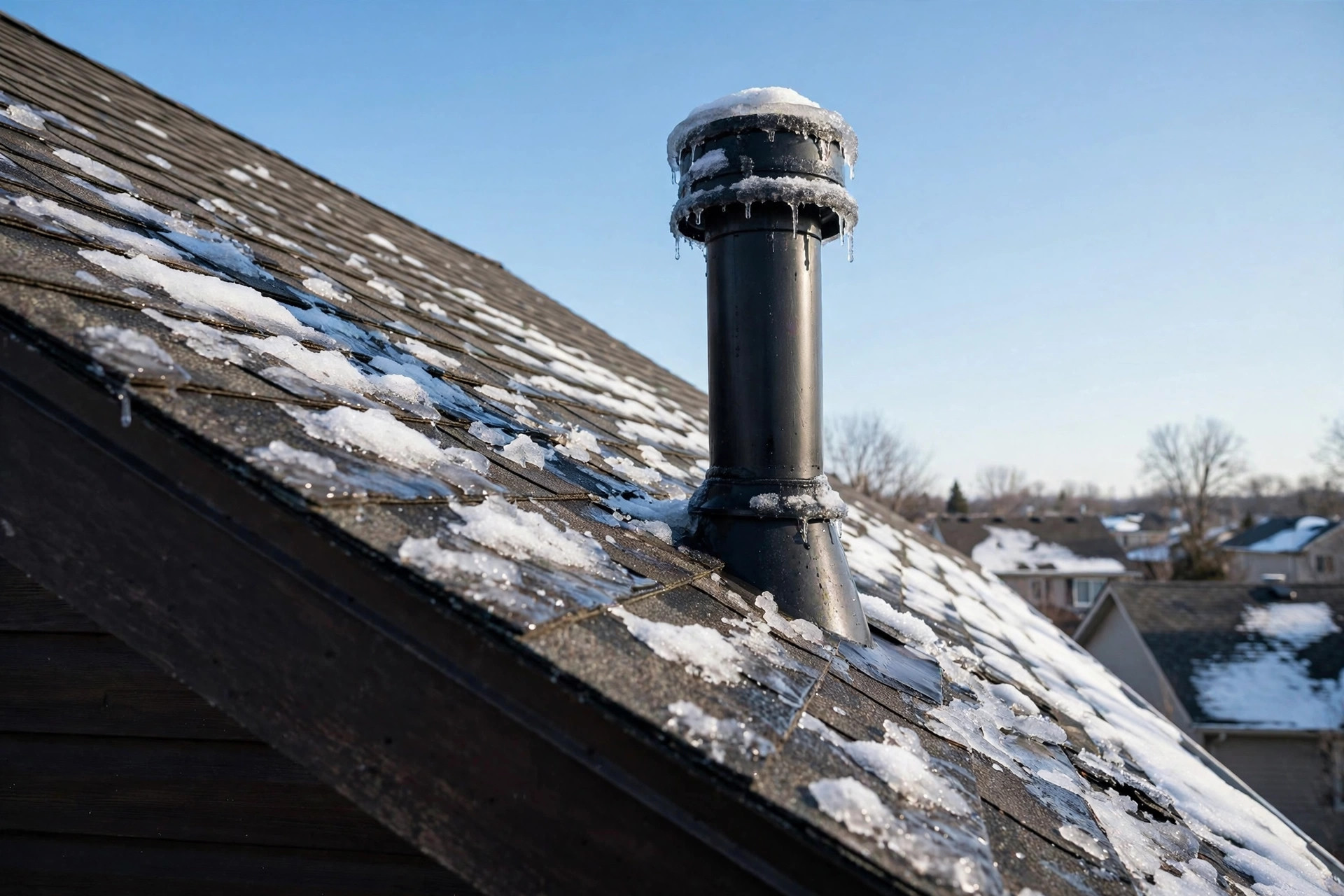
Every spring I get the same call: the drains gurgle, there's a sewer smell in a bathroom that wasn't there in January, and the homeowner has already priced out a drain cleaning. Half the time there's nothing wrong with their drains at all. The problem is on the roof. Your plumbing vents spend the winter getting choked by snow load and frost, and the spring thaw — when the whole system starts moving melt-season water — is when a starved vent system finally shows itself. Snaking a drain that was never clogged doesn't fix it, and I've seen people pay for the cleaning twice before anyone looks up.
What the Vents Actually Do
Every drain in your house needs air behind the water. When a tub empties or a toilet flushes, the water moving down the line pulls air with it. The vent system — pipes that run up through the walls and out the roof — supplies that air. It does a second job too: it's where sewer gas is supposed to go. Out the roof, above your nose, all day long.
Each fixture protects you from that gas with a trap — a U-shaped bend that holds a plug of water, roughly two inches deep, in the line. Here's the failure that matters: when a draining fixture can't get air from the vent, it pulls air from wherever it can — including through the trap of a nearby fixture. That siphons the trap's water plug down, sometimes to nothing. An empty trap is an open door between your bathroom and the sewer. That's the smell. And the gurgle you hear is the sound of the system gasping through those traps.
Why Spring Is When It Shows
The main vent stack leaves your roof as an open pipe, usually 3 inches across. Two things narrow it over a winter:
- Frost closure. Every house vents warm, moist air up that stack all winter. At the exposed top, that moisture freezes to the inside walls of the pipe as hoarfrost — the same rime you see on a fence rail. In a long cold snap the frost ring can close a 3-inch opening down to a fraction of that. The stack isn't blocked; it's breathing through a straw.
- Snow burial. A low-pitch roof or a stack on the lee side can sit buried after a heavy snowfall or a roof slide, sometimes for weeks.
All winter your water use is normal and the system copes, barely. Then the thaw arrives: sump discharge, longer showers after spring sports, laundry catching up — the drains run harder at exactly the moment the vents are at their worst. The gurgling starts. The weakest trap in the house — often a floor drain or a rarely used guest-bathroom sink — gets siphoned dry, and the smell arrives.
The Fixes That Aren't a Drain Cleaning
Work through it in order:
- Check the roof first. From the ground with binoculars, or have someone up there who's comfortable on a roof: is the vent stack buried, capped with ice, or frosted nearly shut? Clearing snow and melting a frost plug with hot water (poured from above, carefully) is the entire repair more often than you'd think.
- Refill every trap. Run water in every fixture for 30 seconds — sinks, tubs, showers, and half a bucket into the floor drain. If the smell disappears for days and creeps back, a trap is being siphoned, which confirms air starvation rather than a blockage.
- Look for the pattern. Gurgling at ONE fixture when another drains, in the same bathroom group, points at that group's vent. Whole-house gurgling points at the main stack.
- The permanent fixes are unglamorous: enlarging the stack's exposed terminal (a wider section frosts closed far slower), insulating the attic run so less moisture condenses on the way up, or clearing a genuine obstruction — I've pulled bird nests and a hockey ball out of vent stacks. This is general plumbing work, diagnosed once, not a cleaning repeated every spring.
When It Really Is the Drain
A vent problem gurgles and smells, but the drains themselves still run at full speed. If water is also draining SLOWLY — a sink that fills, a tub that empties in minutes instead of seconds — that's flow, not air, and that one does need a drain cleaning. The two problems get confused because they arrive together in spring, but they have different causes and different fixes, and paying for one when you have the other just buys you the same phone call twice.
If your house gurgles through the thaw, or a sewer smell keeps finding its way back after you've refilled the traps, call Concepts Plumbing at (705) 715-1513 and tell me the pattern — which fixtures, when it happens, whether the drains run fast or slow. That pattern is most of the diagnosis. You can also book a free estimate online and I'll come trace it from the roof down.