By Mark Johnston, Owner, Concepts Plumbing
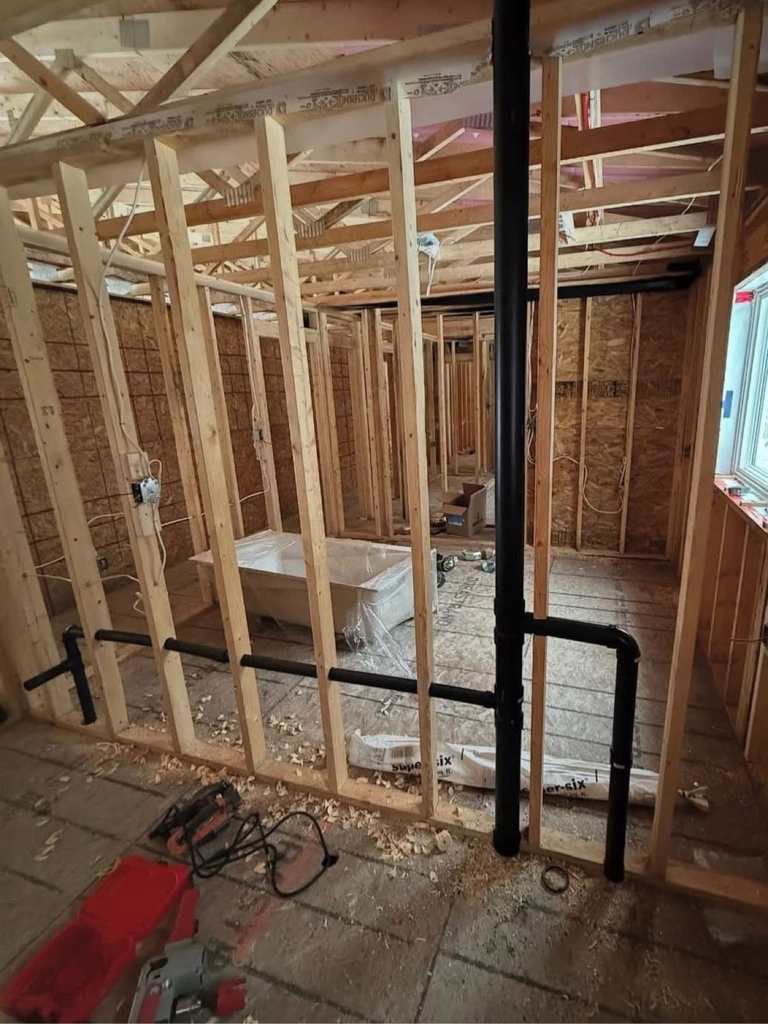
There's a version of every bathroom renovation where the plumber walks in before a single stud moves, and a version where the plumber walks in after the framing's done and the tile's been picked. Same bathroom, same fixtures — wildly different bills. The difference is a handful of decisions that are nearly free to make in spring, when the walls are still closed and the job is still drawings, and painfully expensive in July, when changing your mind means opening finished work. I get called in for both versions. Here's the list I wish every renovator locked in before demo day.
Where the Shower Valve Goes (and Which One)
The valve is the decision you live with every single day, and it's the one most often made by accident — wherever the old one happened to be.
- Placement. A valve you have to reach through the shower spray to turn on is a valve in the wrong place. Near the entry, or on a side wall you can reach from outside the spray, costs nothing extra at rough-in and something every morning for twenty years if you skip it.
- Type. Ontario code requires a pressure-balance or thermostatic valve on a shower — it stops the scald when someone flushes a toilet mid-shower. Beyond code, this is where you decide: separate temperature and volume controls, a diverter for a hand shower, a rain head. Each of those is a different valve body and different piping behind the wall. The trim kit you see in the store is the last 10 percent of that decision; the body in the wall is the part that's expensive to change.
- The wall decides some of it. A valve and its piping need a full-depth stud bay. If your dream layout puts the valve on a shallow or exterior wall, spring is when we find another way — July is when we find out the tile has to come off.
If a new shower is the heart of the reno, this is the conversation behind our shower installation work — and it takes twenty minutes at rough-in stage.
Whether the Drain Can Actually Move
Homeowners draw the new layout on paper, and paper lets you put the toilet anywhere. The floor joists and the existing drain have votes too.
- Toilets drain through a 3-inch line that needs steady fall — a quarter inch per foot — back to the stack. Moving a toilet a few feet along the line is usually straightforward. Moving it across the room can mean cutting into joists, dropping a ceiling below, or coring a basement slab. All possible. None cheap, and the price difference is decided entirely by which side of the room you picked.
- Tubs and showers sit on 2-inch drains with a trap below the floor. A tub-to-shower conversion usually keeps the drain where it is — the trap arm reaches — but the drain often needs upsizing from the tub's 1½-inch to a full 2-inch, which means opening the floor or ceiling below regardless.
- The standard toilet rough-in is 12 inches from the finished wall to the centre of the drain. Older homes turn up with 10-inch and 14-inch rough-ins all the time, and the toilet selection that fits is completely different. Measure before the catalogue comes out.
This is the unglamorous core of general plumbing rough-in work, and it's exactly what our one-year workmanship warranty stands behind once the walls close — which is why the time to argue about it is while you can still see it.
The Supporting Decisions Nobody Puts on Pinterest
- Shut-offs for everything. Every fixture gets its own isolation valve at rough-in, so a future repair is a ten-minute job instead of a whole-house shutdown. Costs almost nothing now.
- Water heater capacity. Adding a soaker tub, a second shower, or a rain head with body sprays? A big soaker tub can hold 250 litres or more — most of a standard tank. Decide in spring whether the heater grows, goes tankless, or stays; discovering it on the first bath in the finished bathroom is miserable.
- The permit and the inspection. A bathroom reno that moves plumbing needs a permit in most Simcoe County municipalities, and the rough-in gets inspected BEFORE the walls close. That inspection is a hard scheduling gate in the middle of your reno — build the timeline around it in April, not around the inspector's backlog in July.
The Order That Keeps It Cheap
Decide the layout. Decide the valve. Confirm the drains can do what the layout asks. Confirm the heater can feed it. Then demo, rough-in, inspection, and only then do the walls close. Every one of those decisions is a conversation in spring and a change order in summer.
If you're renovating this summer, the cheapest appointment of the whole project is a plumber walking the room before it's torn apart. Call Concepts Plumbing at (705) 715-1513, or book a free estimate online, and we'll lock in the plumbing decisions while they're still the cheap kind.