By Mark Johnston, Owner, Concepts Plumbing
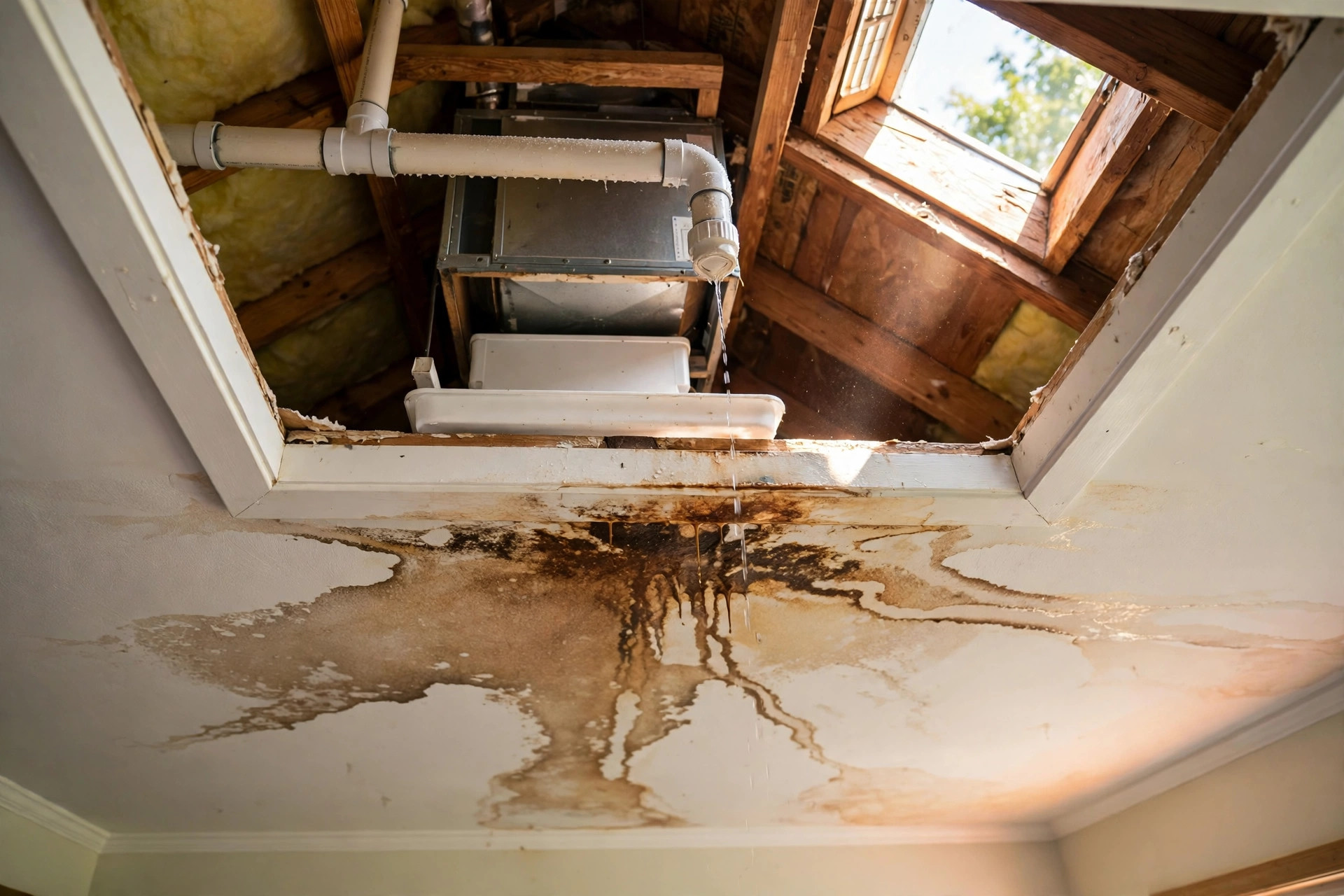
Your air conditioner is a plumbing fixture. Nobody thinks of it that way — it has no tap, no handle, nothing to flush — but on a humid Simcoe County day a central AC pulls litres of water out of your home's air, hour after hour, and every drop of it leaves through a drain line tied into your plumbing. A typical system makes 20 litres on a muggy day and can push well past 40 at peak humidity. That water has exactly one small plastic line to escape through. When the line clogs — and the clog is a matter of seasons, not luck — the water doesn't stop. It just finds a new route, usually through your ceiling. The brown stain that appears out of nowhere in the middle of summer is very often this, and it's one of the most avoidable water problems in the house.
Where the Water Comes From and Where It's Supposed to Go
Warm house air passes over the AC's cold evaporator coil — usually in the furnace ductwork in your basement, sometimes in an attic or a closet air handler. Moisture condenses on the coil the way it beads on a cold glass, drips into a shallow pan under the coil, and leaves through the condensate drain: a small PVC line, typically ¾-inch, that runs downhill to a floor drain, a laundry tub, a sump pit, or a condensate pump that lifts it to a drain when gravity can't. That's the whole system. No valve, no shut-off, nothing between a working air conditioner and a steady stream of water except that one little line staying open.
The Clog: Algae, Slime, and a Trap Full of Jelly
Condensate is nearly pure water, warm-ish, moving slowly through a small pipe all summer — an ideal home for algae and bacterial slime. The growth concentrates in the line's trap (the U-bend that's supposed to be there) and at any low spot where the line sags. Season by season the passage narrows until one humid week it closes entirely. Then the drip pan under the coil fills, and fills, and overflows — into the furnace cabinet if you're lucky, across a closet floor or through a ceiling if the air handler is up high. A plugged line produces no warning noise, no smell, no error light on most systems. The first symptom is water damage.
Signs yours is on the way:
- A musty, swampy smell near the furnace when the AC runs — growth in the pan and line.
- Water or rust stains around the base of the furnace, or a condensate pump that runs constantly or not at all.
- A ceiling stain appearing during a humid stretch, especially below an upstairs air handler or on the ceiling under a finished attic — dry to the touch in spring, back every summer.
- The AC runs but the house feels clammy — a related problem (drainage isn't the fix for that one), worth mentioning on the same call.
The Ten-Minute Maintenance That Prevents It
Once a season, ideally when the AC first starts for the year:
- Find the line. Follow the ¾-inch PVC from the coil pan to where it ends. Know its whole route — if it ever overflows, you'll want to already know this.
- Flush it. Pour a cup of vinegar (or a capful of bleach, never both) into the line's access tee if it has one, then a litre or two of warm water. Vinegar keeps the algae down without attacking the pipe.
- Check the slope. The line should fall steadily toward the drain — about a fingernail's drop every foot of run. Sagging sections hold water and grow slime; a strap or two fixes the sag.
- If there's a condensate pump, pour water into its reservoir and confirm it cycles and empties. A dead pump overflows exactly like a clogged line.
- Look at the pan. Standing slime in the coil pan means the line is already narrowing, even if water still gets through.
Houses with air handlers in attics or finished closets deserve one more thing: a float switch (a "wet switch") in the pan that shuts the AC off when water rises. It's the difference between an overflow that wets a ceiling and an AC that simply stops and waits for you. Cheap part, enormous difference in outcomes.
When It's Already Stained
A stain means the water already won, so the job is two jobs: clear and flush the line (or re-run it with proper slope if it's sagging through a ceiling), and check the condensate path end to end — pan, trap, pump — because a line that clogged once is a line that's telling you about its layout. The ceiling itself is drywall-and-paint work once it's dry; the plumbing mistake is letting it happen a second summer in a row. If the line disappears into finished walls or the drain path was never right, that's drain cleaning and re-routing work we handle regularly.
If you've got a summer ceiling stain, a musty furnace, or a condensate line you've never laid eyes on, call Concepts Plumbing at (705) 715-1513, or book a free estimate online. Ten minutes of maintenance beats one ceiling, every year you own the house.