By Mark Johnston, Owner, Concepts Plumbing
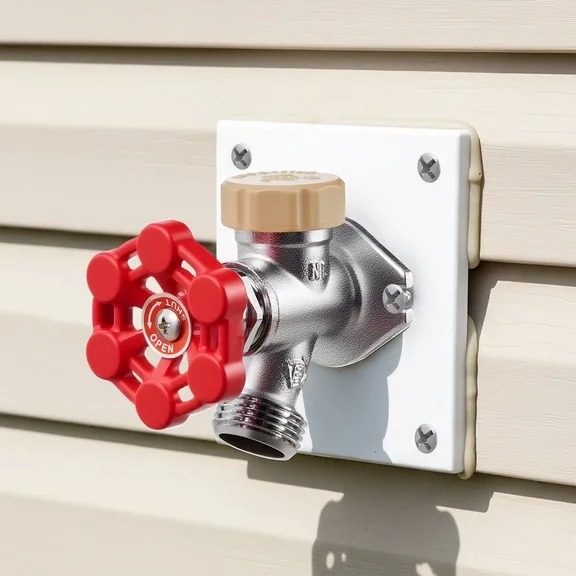
It's one of the strangest calls in plumbing: a leak that starts in January but doesn't get wet until April. The pipe splits during a cold snap in the middle of winter, sits there split for three months without spilling a drop, and then floods the basement wall the first warm Saturday when somebody turns the outside tap on to wash the car. By the time the homeowner notices, the water's been running inside the wall for an hour. Understanding why it happens takes one picture of how a frost-proof tap is built — and it makes the five-minute spring turn-on routine below feel a lot less optional.
How a Frost-Proof Tap Hides a Split
A standard outdoor tap is a short valve at the wall. A frost-proof tap — a sillcock — is a long one. The handle and the hose connection sit outside, but the actual valve seat, the part that stops the water, sits 8 to 14 inches INSIDE the wall, back in the warm part of the house. When you close the tap, the water stops deep inside, and everything between the seat and the outside tip is designed to drain dry out the spout. No standing water in the cold zone, nothing to freeze. That's the whole trick, and it works — until a garden hose stays connected in the fall.
A connected hose traps water in the tube. It can't drain. The first serious freeze expands that trapped water and splits the copper tube lengthwise, usually inside the wall cavity where you can't see it. And here's the hiding part: the valve seat is upstream of the split and still holding. All winter the tap is "off," the split is downstream of a closed valve, and not one drop leaks. The pipe is broken for months and the house stays dry.
Then comes the first turn-on. You open the tap in April, water rushes past the seat for the first time since fall — and pours out of the split into the wall before it ever reaches the hose. Outside, the hose runs a little weak. Inside, the basement wall is filling up. That's the leak that "starts" in April.
The Five-Minute Turn-On Routine
Do this once a year, in this order, and a split tap becomes a minor repair instead of a restoration:
- Find the interior shut-off first. Most outside taps have a dedicated shut-off valve inside, near where the pipe leaves the house. Know where it is and that it works — it's your emergency stop for everything below.
- One person inside, one at the tap, phones on. The inside person stands where the pipe runs — basement, crawlspace, utility room — and watches and listens while the outside person opens the tap slowly.
- Open it and watch the meter too. A water meter's small leak dial spinning with the hose running tells you water is moving; if the inside wall starts showing moisture, or you hear water running inside the wall cavity, shut it down at the interior valve immediately.
- Run it a full minute before you walk away. A split often shows as a slow seep at the baseboard or a drip at the ceiling below within the first minutes, not instantly.
- Check it again at the end of the day. Small splits weep slowly under insulation. A dry wall at noon and a dry wall at supper means you're clear.
What the Repair Looks Like
If yours split, the fix is a replacement sillcock of the same length — the lengths matter, because the seat has to land in the warm zone — cut out and swapped from inside, usually through the basement or a small access opening. It's a leak repair measured in hours when the wall stayed dry. When the split ran unnoticed for a season of watering, the same job grows drywall, insulation, and mould work around it. Same pipe. Same split. The difference is entirely when somebody was standing inside watching.
And the prevention is free, forever: hoses come off before the first freeze, every fall, no exceptions for "one more weekend." A frost-proof tap with nothing attached cannot trap water, and untrapped water cannot split it.
If your spring turn-on finds a weak hose, a wet wall, or a spinning meter you can't explain — or if the outside tap and its shut-off haven't been touched in years and you'd rather have it checked — call Concepts Plumbing at (705) 715-1513. Turn-on leaks and tired outdoor taps are everyday outdoor plumbing work for us, and you can also book a free estimate online.