By Mark Johnston, Owner, Concepts Plumbing
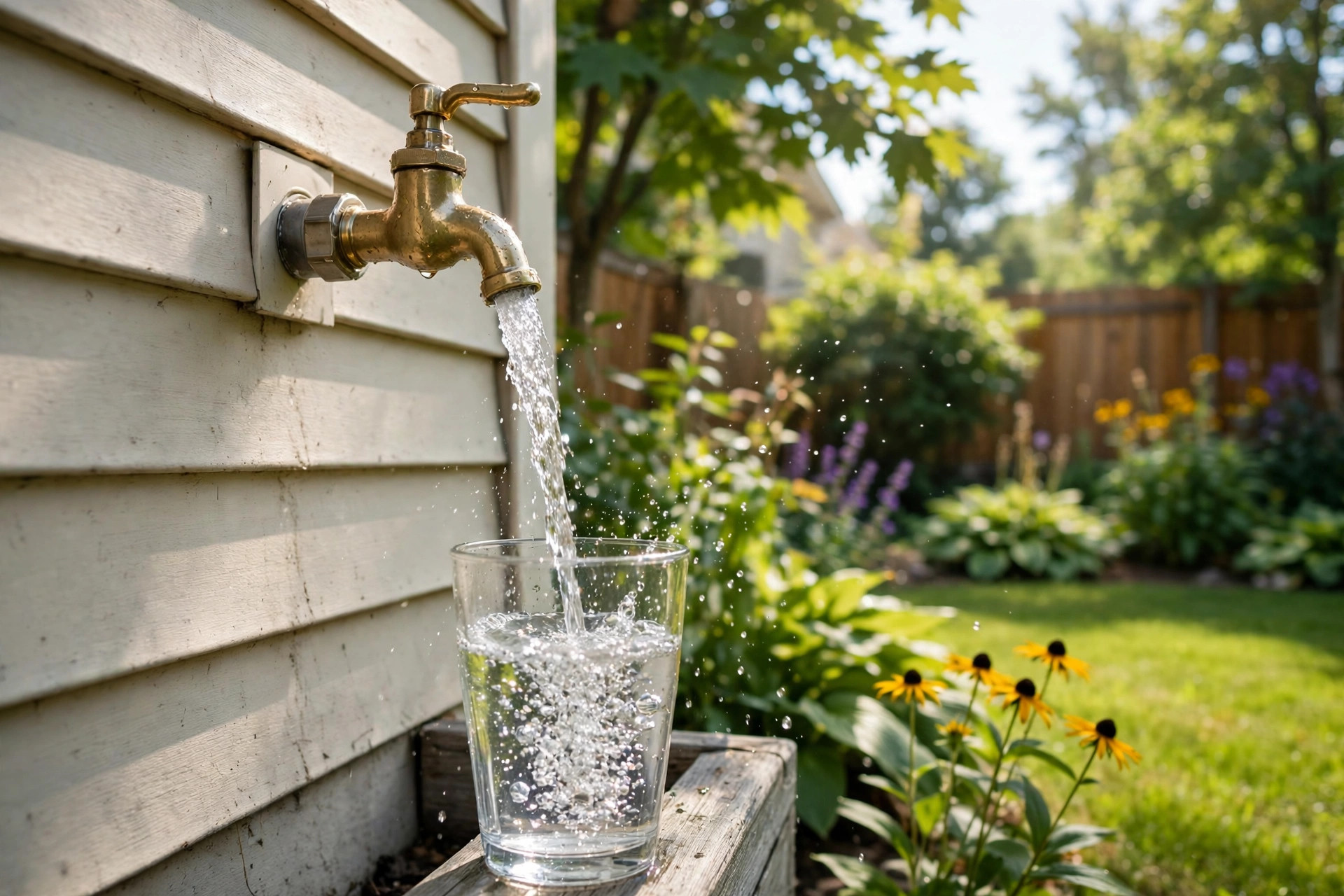
Fill a glass from the cold tap in January and it's genuinely cold — near the temperature of the ground the water travelled through. Fill the same glass in the middle of July and in plenty of Barrie and Orillia homes it's lukewarm, flat-tasting, and disappointing. Nothing is broken. Cold water in summer is fighting physics in three places between the street and your glass, plus one plumbing fault that imitates all three. Here's the tour, in the order the water takes it.
It Starts Warm at the Street
Municipal water is buried below the frost line — in Simcoe County that's roughly four feet down, deep enough that winter can't freeze it. But four feet of July soil is not cold. By midsummer the ground at service depth has warmed into the high teens, and the water arriving at your house arrives at that temperature. Add the last stretch — the service line crossing a sun-baked driveway or running under hot asphalt — and a house on a long rural service can gain several more degrees before the water ever gets inside. The city didn't change anything. The ground did. This is also why the first glass after the tap's sat all day is the worst one: that water has been sitting in pipe inside a warm house, equilibrating to the house.
Then Your Own House Warms It More
- Attic and ceiling runs. Any cold line routed through an attic or a sun-heated ceiling space is running through the hottest air in the house. A shower at 4 p.m. after that line has baked all day starts warm on both settings.
- Pipes snuggled against hot lines. In older homes, cold and hot lines often run touching in the same joist bay, sometimes for the full length of the house. The cold line spends all day absorbing heat from its neighbour.
- Long, slow runs to far fixtures. The bathroom at the end of the house gets water that spent the longest in warm pipe. Run volume matters: it can take 30 to 60 seconds of flushing — several litres — before true street-temperature water reaches a far tap in summer.
The One That's Actually a Fault: Crossover
If your cold water isn't just lukewarm but TEPID — suspiciously warm, all the time, at every tap, even first thing in the morning — suspect crossover. Single-lever shower valves, some washing-machine hookups, and worn mixing cartridges can let hot water push across into the cold line when pressures unbalance. The classic test: run the cold tap closest to the water heater in the morning before any hot water's been used. If it starts cool and turns warm within seconds, hot water is being fed into the cold side somewhere, and that's a repair, not a season. It's general plumbing diagnostic work — we isolate fixture by fixture until the crossover shows itself.
The Taste Goes With the Temperature
Warm water tastes different for real reasons: chlorine dissipates faster as water warms, so summer tap water loses the crisp treated taste; warm water also picks up more flavour from the pipes it sits in, which is part of why the first-draw glass tastes flat or faintly of plastic and metal. It's also why public health advice says to cook and make coffee from the COLD tap run fresh, never the hot and never the warm first-draw — minerals and metals leach more readily into warmer, standing water.
Getting a Properly Cold Glass Back
- Flush the far taps. For drinking water, run the cold tap until you feel the temperature drop step down — that's street water arriving. In July that's your cold water; there's no colder setting hiding anywhere.
- Insulate cold lines in hot spaces where they're accessible — attic runs especially. It won't beat the street temperature, but it stops your own house from adding degrees.
- Fix the crossover if you have one. Lukewarm-everywhere, all-day, all-season is not a summer problem; it's a valve problem wearing a summer costume.
- Keep it in the fridge. The honest finish: a filled jug in the fridge is colder than any tap in August will ever be.
Cold running warm in July is normal. Cold running warm in October, or hot enough to notice at the kitchen tap first thing in the morning, isn't. If yours sounds like the second kind, call Concepts Plumbing at (705) 715-1513, or book a free estimate online, and we'll find where the heat is getting in.