By Mark Johnston, Owner, Concepts Plumbing
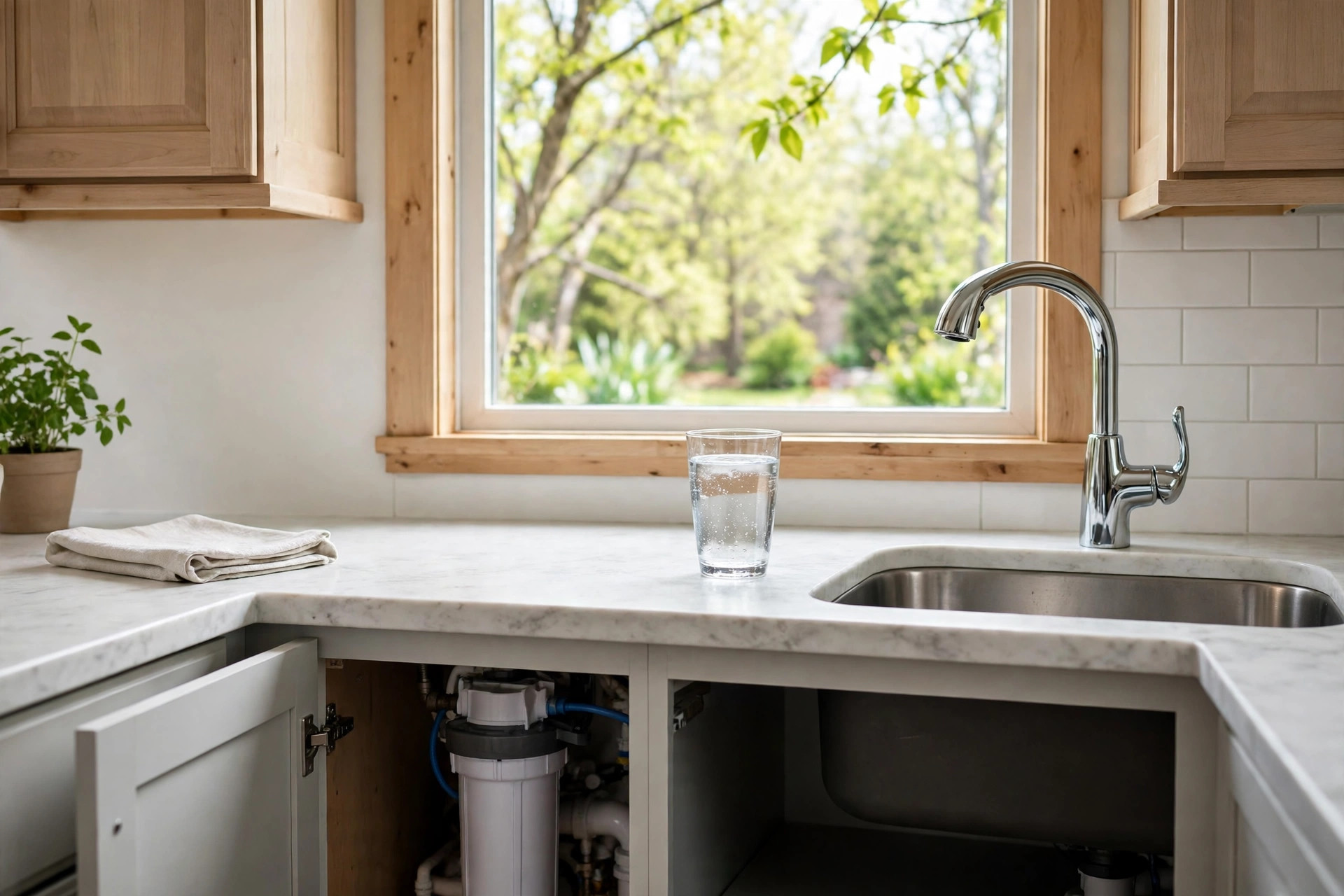
For about three weeks every spring, the water in a lot of Simcoe County homes tastes like a pond. Or a swimming pool. Or, for a day or two, it runs faintly brown from the cold tap and clears if you let it sit. Homeowners call asking if something's wrong with their plumbing, and most of the time the honest answer is: your plumbing is fine — it's spring out there, and spring gets into the water supply the same way it gets into everything else. But "most of the time" isn't all of the time, and the difference matters. Here's how to tell which taste change you're dealing with.
The Three Normal Spring Changes
Earthy, pondy, lake-water taste. Towns drawing from lakes — Orillia draws from Lake Couchiching, and lake country all around us does the same — get a few weeks of this every year. Snowmelt and spring runoff wash a load of organic material into the lake, and the warming water turns over and stirs up compounds (geosmin is the famous one) that taste like soil and smell like a shoreline. Humans can taste geosmin at astonishingly low concentrations, so the water can taste strongly of lake while testing perfectly safe. It fades as the lake settles. Carbon filtration kills the taste entirely — more on that below.
A stronger chlorine smell than usual. Two reasons. Runoff season makes the raw water harder to treat, so plants adjust disinfectant levels to stay ahead of it. And every municipality flushes its mains in spring — scouring the year's sediment out through hydrants, neighbourhood by neighbourhood. Freshly flushed water near your street often carries a noticeable chlorine edge for a day or two. It's the smell of the system being cleaned, not contaminated.
Brief discolouration after flushing. When your street's mains get flushed, the flow stirs up iron and manganese sediment in the pipes, and some of it reaches your tap: yellow to tea-brown water that clears from the bottom of a glass upward and settles out. It looks terrible and it's usually harmless and gone within hours. Run the cold tap — the one nearest where water enters the house — for a few minutes to pull clean water through, and don't run a load of white laundry until it clears.
The Changes That Are Actually Your House
- Rusty water that never fully clears, or only from one tap. System-wide sediment clears everywhere at once. One bad tap, one bad floor, or water that's rusty every morning and clears after a minute points at your own pipes — corroding galvanized lines or a water heater full of sediment.
- Rotten-egg smell, especially on well water. That's hydrogen sulphide or sulphur bacteria, and it does not come and go with the seasons the way lake taste does. It's a treatment problem with specific fixes, not a wait-it-out problem.
- Metallic taste that persists for weeks. Standing water in older copper or galvanized plumbing picks up a metallic edge; if it's constant rather than spring-only, the pipes are the story.
- Any sudden change paired with a drop in pressure or visible particles. Particles — sand, grit, black flakes — mean something physical is breaking down somewhere, and that earns a look, not a shrug.
Well owners: spring is also when your water should be tested. Ontario's public health units test private drinking water for bacteria free of charge — pick up the sample bottle, follow the timing instructions, and get the result before the season's guests arrive. Melt water moving through thawing ground is exactly when a marginal well or septic separation shows up in a sample.
When a Filter Earns Its Place
If your only complaint is three weeks of lake taste, a filter is a comfort purchase — a good carbon filter removes that taste and the chlorine edge completely, and plenty of families decide that's worth it every single spring. If the taste never leaves, if you're on a well with sulphur or sediment, or if you're filling kettles and baby bottles from a tap you don't love, filtration stops being about comfort. A whole-house water filtration system treats every tap, sized to the house's flow so it doesn't cost you pressure at the shower — and the right setup depends on what's actually in your water, which is why the test comes first and the equipment second.
Not sure which spring change you're tasting? Run the cold tap for two minutes in the morning. If it clears and the whole neighbourhood tastes the same, it's the season. If it's one tap, one smell, or it never really goes away, call Concepts Plumbing at (705) 715-1513, or book a free estimate online, and we'll tell you whether it's the town, the season, or your house — before anyone sells you a filter.