By Mark Johnston, Owner, Concepts Plumbing
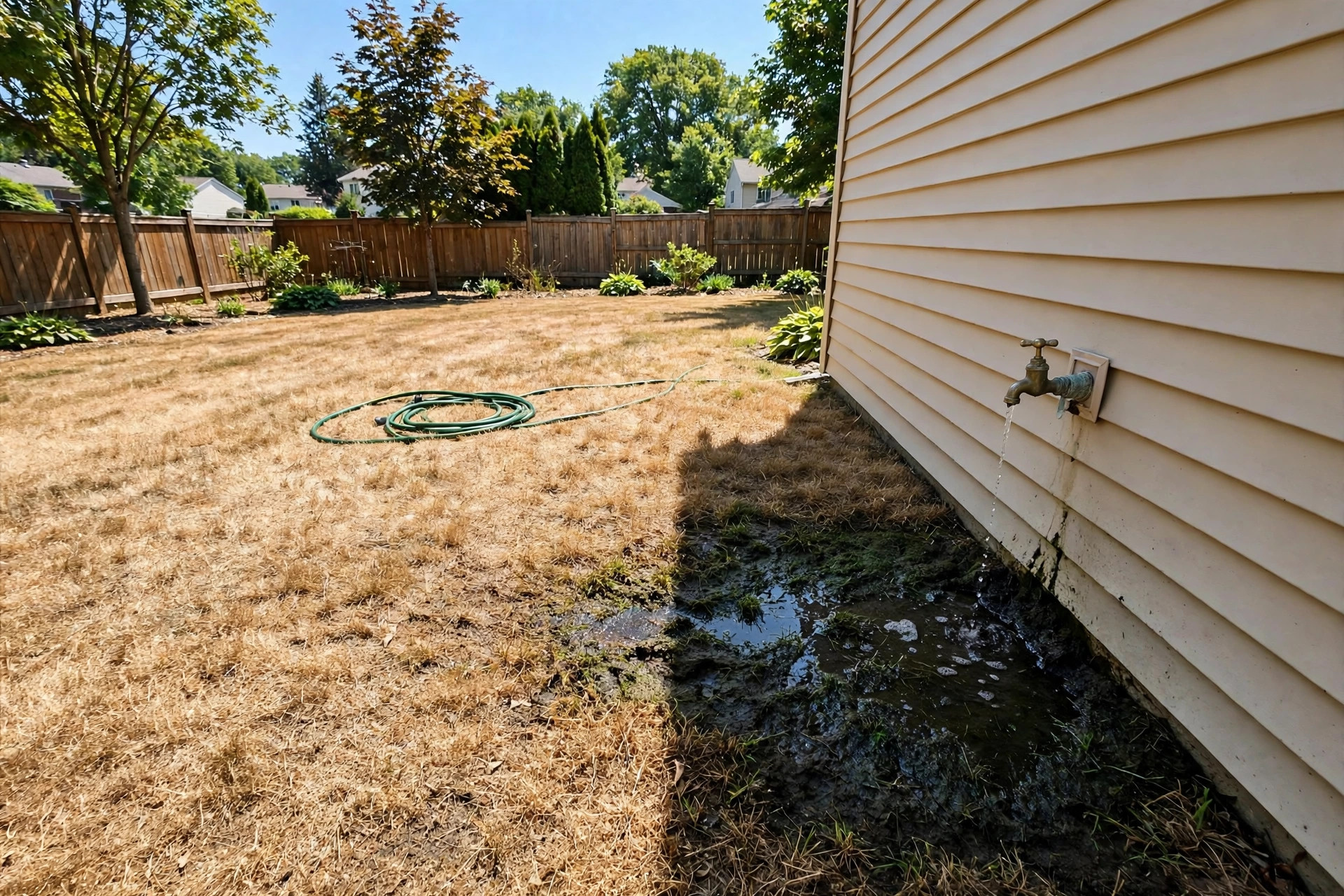
A doubled water bill in February starts a hunt inside the house. A doubled water bill in August should start the hunt at the meter — because in summer, the expensive leaks are almost never indoors. They're outside, underground, and running around the clock into soil that swallows the evidence. A lawn can absorb a shocking amount of water without ever showing a puddle, and an irrigation line doesn't care that nobody's watching. The good news: summer outdoor leaks follow a short list of usual suspects, and your water meter — the most honest witness in the whole system — will confirm each one as you eliminate it. Here's the hunt, in the order I'd run it on your property.
First, Let the Meter Testify
Before touching a wrench, get the meter's story. Find it (usually where the water line enters the basement), and note the reading and the small leak-indicator dial — a tiny triangle or star that spins when water is moving.
- Pick a two-hour window when the house uses no water — out for the afternoon is perfect. Read the meter before and after.
- If the reading moved, water is running somewhere, full stop. The leak indicator spinning with every tap off means it's running right now.
- Now isolate. Shut off the irrigation system's supply valve and repeat the test. Stopped? The leak is in the irrigation. Still running? Shut the house's main valve where it enters — if the meter STILL moves with the house isolated, the leak is in the buried service line between the street and the house, which is a different and more serious conversation.
Ten minutes of meter reading splits the problem into thirds before you've dug a single hole. This is exactly how professional leak detection starts: prove where it isn't, and what's left is where it is.
Suspect One: The Hose Bib That Drips All Season
The most common outdoor leak is the least dramatic: a hose bib with a worn washer, dripping steadily into a garden bed that hides it completely. One drip per second sounds like nothing. Run it: a drip a second is more than 10,000 litres a year, and a bib that's past dripping into a thin continuous trickle — the kind you can only see up close — can waste that much in a single summer. Check every outside tap with the hose disconnected and your hand underneath; they hide their drips behind the hose connection all season. A washer replacement is minutes of work and the cheapest water you'll ever save. While you're there, a bib that only leaks when OPEN — water spraying from the stem — is the packing wearing out: also cheap now, a replacement tap later.
Suspect Two: The Irrigation Line You Can't See
Underground sprinkler lines crack from frost heave, get nicked by aerators and edging tools, and split at fittings — then leak only while their zone runs, or constantly if the crack is on the main feed before the zone valves. The signs are subtle by design: one patch of lawn that's greener and softer than everything around it in a dry month; a head that pops up weakly while its neighbours run strong (pressure escaping underground); a zone valve box that's always muddy. Run each zone and walk it: a leak big enough to double a bill usually betrays itself as a spot that stays wet hours after the zone shuts off. Irrigation laterals are shallow and repairable in an afternoon. The main feed line leaking at full pressure, all day, all summer, is the one that writes the big bills — and it's the reason the meter test with the irrigation isolated matters so much.
Suspect Three: The Pool That's Losing More Than Weather
Pools lose water to evaporation — in a hot, windy week, a few millimetres a day is normal. A pool dropping noticeably more is leaking or its auto-fill is stuck open, quietly metering water in to replace what escapes. The bucket test separates weather from leaks: set a filled bucket on the pool steps with the water levels marked inside and out, wait 24 hours, and compare. If the pool fell further than the bucket, the difference is a leak — liner, light conduit, or the plumbing lines to the pump and filter, which are outdoor plumbing territory and pressure-testable. An auto-fill valve stuck open is simpler: it runs when nobody's swimming and the meter catches it in the isolation test above.
What the Hunt Usually Finds
Nine summers out of ten, the doubled bill is a washer, an irrigation crack, or a stuck valve — unglamorous, fixable, and obvious once the meter narrows it down. The tenth is the buried service line, and that one you want diagnosed early and precisely, because digging in the wrong spot is the expensive way to find a pipe. Either way, the method doesn't change: meter first, isolate second, dig last.
If your meter moves with everything off and the source won't show itself, call Concepts Plumbing at (705) 715-1513 for proper leak repair — or book a free estimate online. Bring the two meter readings with you; they're the first thing I'll ask for, and they'll save us both an hour.